


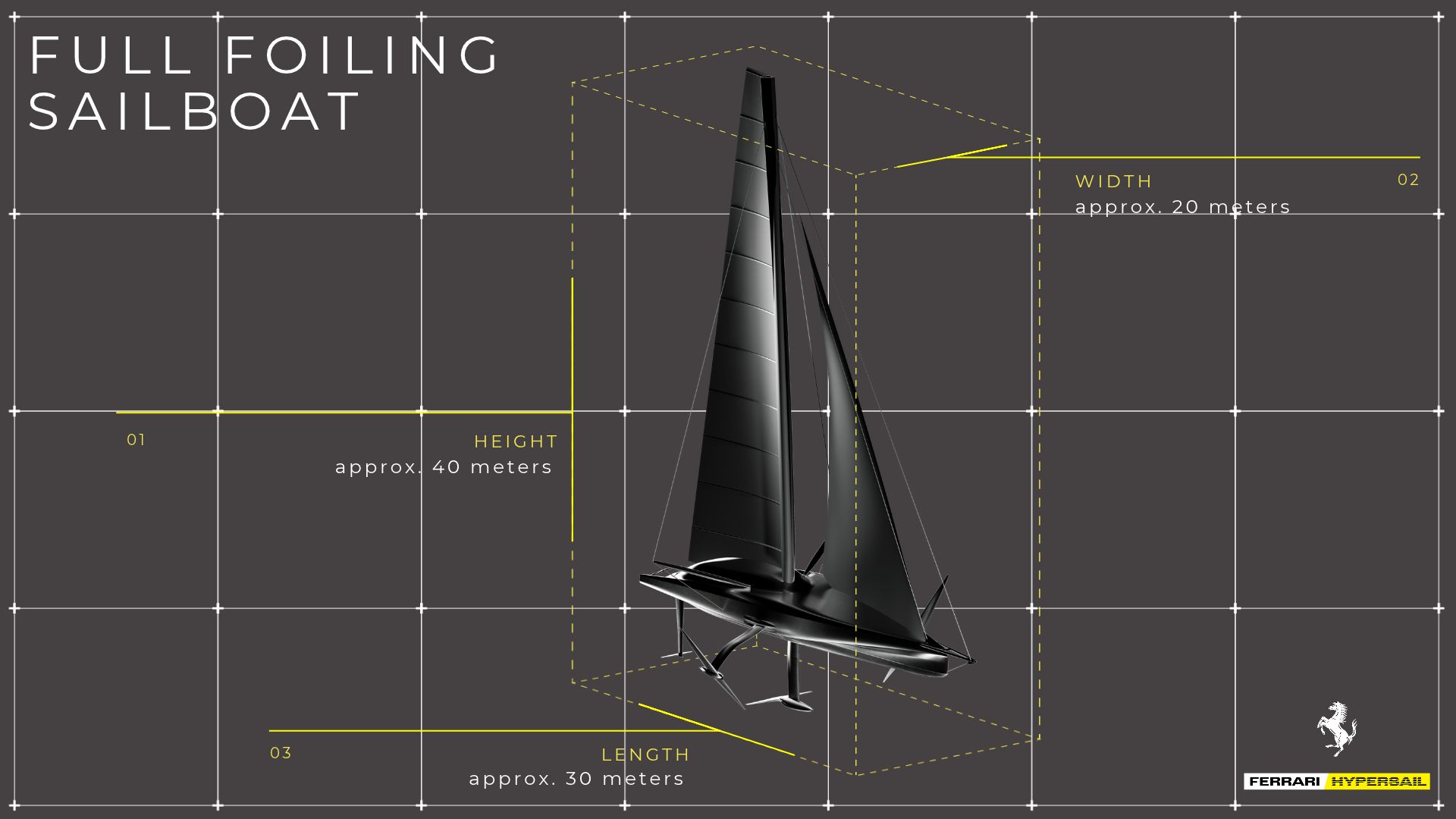
When Ferrari assembled the technical team behind its pioneering 100-foot foiling monohull, Southern Spars and North Sails were involved in the development of an integrated Engine Above Deck in which the mast, rigging and sails operate as one aerodynamic and structural system.
The Engineering Challenge
Creating enough aerodynamic force to lift the yacht onto its foils is only part of the challenge. The system must also maintain efficient airflow, deliver stable power across a wide operating range, and remain manageable as conditions change offshore.
For Southern Spars, this meant developing a lightweight mast and rigging package capable of supporting immense aerodynamic and structural loads while delivering the responsiveness and reliability required for sustained ocean flight.
The Aerodynamic Gearbox
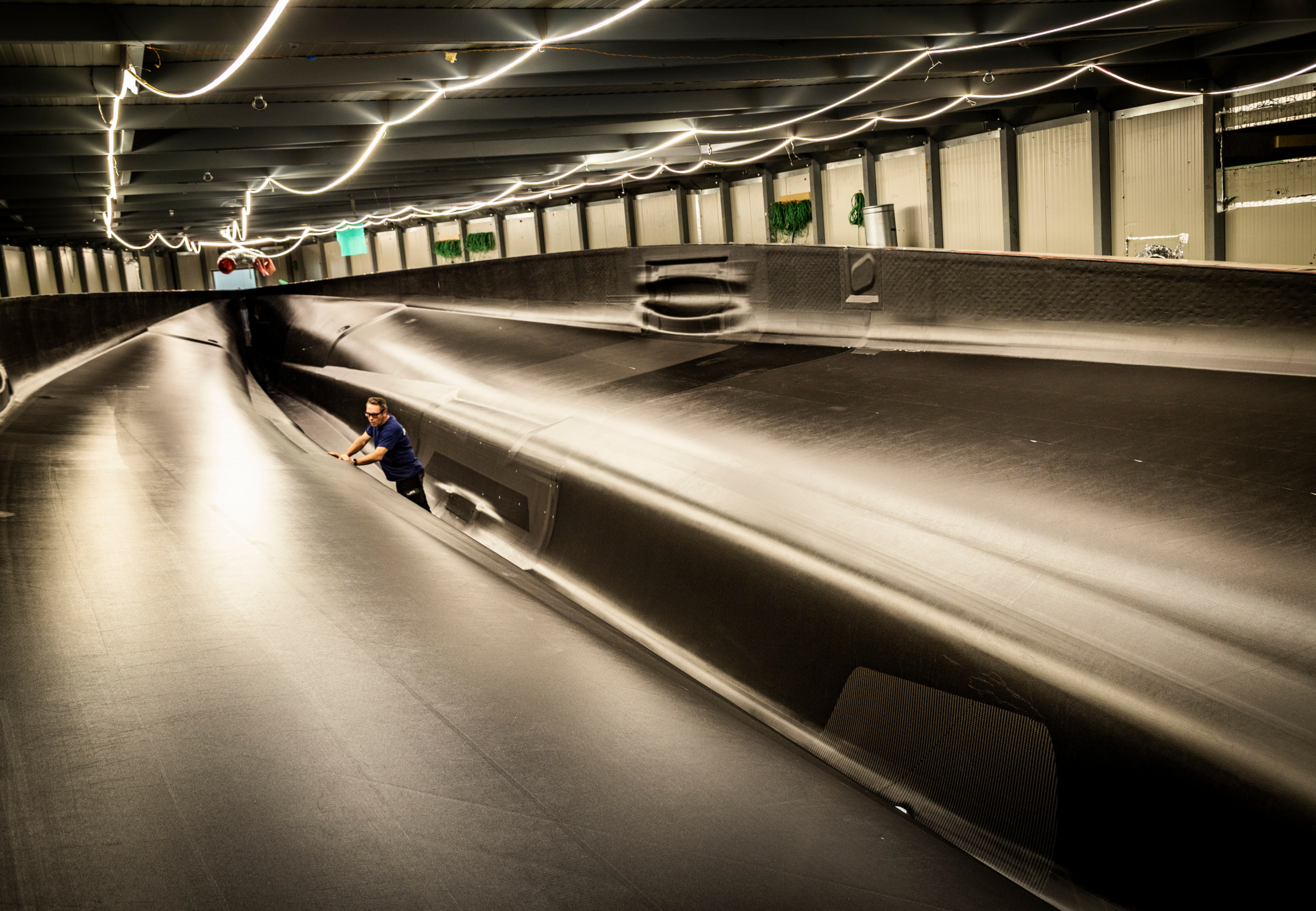
At the heart of the Engine Above Deck is a rotating 35.5-metre D-section carbon mast, designed and engineered by Southern Spars to work with the first fully reefable double-skin mainsail developed for offshore sailing.
Together, the mast and mainsail form an aerodynamic gearbox with an exceptionally broad operating window. The system can adapt continuously to changes in apparent wind angle, wind strength, boat speed and sea state.
Key mast features include:
- Approximately ±50° of mast rotation
- Deck-spreader configuration for efficient staying angles
- Twin linear luff tracks supporting both sail skins
- Integrated hydraulic Cunningham adjustment at full hoist and when reefed.
- Fibre optics and integrated communications, radar and camera systems
- Flexible mast-to-luff sealing system
- Twin locking headboard car engineered for reefing under extreme loads
The mast becomes an active aerodynamic device. Its rotation influences airflow across the complete sail plan, while hydraulic cylinders manage the resulting rigging loads & aid mast bend control.
Future Fibres Composite Rigging
Reducing weight aloft is a key factor in ensuring take off in lighter winds. Every kilogram removed from the mast and rigging lowers the yacht’s centre of gravity, reduces pitching, and improves flight efficiency.
At the same time, the Future Fibres composite rigging must withstand the exceptional dynamic loads generated by a 100-foot yacht travelling at sustained high speeds.
Mast rotation adds another challenge. As the mast turns and loads transfer across the rig, conventional standing rigging can lose tension. Ferrari Hypersail addresses this through a first-of-its-kind interaction between the Future Fibres rigging and the yacht’s outriggers. The outriggers take up the developing slack, preserving the correct rig geometry and consistent structural support throughout the mast’s rotation range.
The mast, outriggers and rigging have therefore been developed as one structural package. The rigging does more than hold the mast upright: it forms part of an actively managed system designed to preserve mast control, sail shape and aerodynamic efficiency.
The First Reefable Double-Skin Offshore Mainsail
Ferrari Hypersail’s fully reefable double-skin mainsail represents another significant first.
Double-skin mainsails have demonstrated their aerodynamic potential in short-duration, inshore competition, including the America’s Cup. This is the first time the concept has been developed as a fully reefable system for sustained offshore sailing.
Constructed using proprietary North 3Di technology, the two sail skins create an efficient wing-like profile with greater control over camber and twist than a conventional single-skin sail.
Reefing is essential offshore, where sail area must be reduced rapidly as conditions change. Structural bridges within the battens connect the port and starboard skins through the mast’s twin linear luff tracks, ensuring both skins raise, lower and reef in precise synchronisation.
A twin locking headboard car withstands extreme loads while enabling reefing, and additional proprietary systems preserve the relationship between the skins throughout the sail’s operating range.
The result combines the aerodynamic efficiency of a double-skin profile with the adaptability and sail-handling capability required for long-distance ocean sailing.
Integrated Sail Control
An 11-metre carbon boom supports the mainsail and incorporates hydraulic systems that continuously optimise its shape. These include hydraulic outhaul control, integrated sheeting and reefing arrangements developed specifically for the double-skin architecture.
The initial configuration also includes two single-skin headsails. Further sail plans will be introduced during commissioning, allowing the team to optimise performance across the yacht’s offshore polar diagram and progressively expand its operating envelope.
Cross-Industry Collaboration
North Sails, Southern Spars and Future Fibres have brought to the Ferrari Hypersail project decades of expertise in sail aerodynamics, composite structures, rig design, structural loading and offshore operation.
Together, the brands have contributed to two important firsts: a fully reefable double-skin mainsail for sustained offshore sailing and an innovative deck spreader system that manages rigging slack as the mast rotates.
